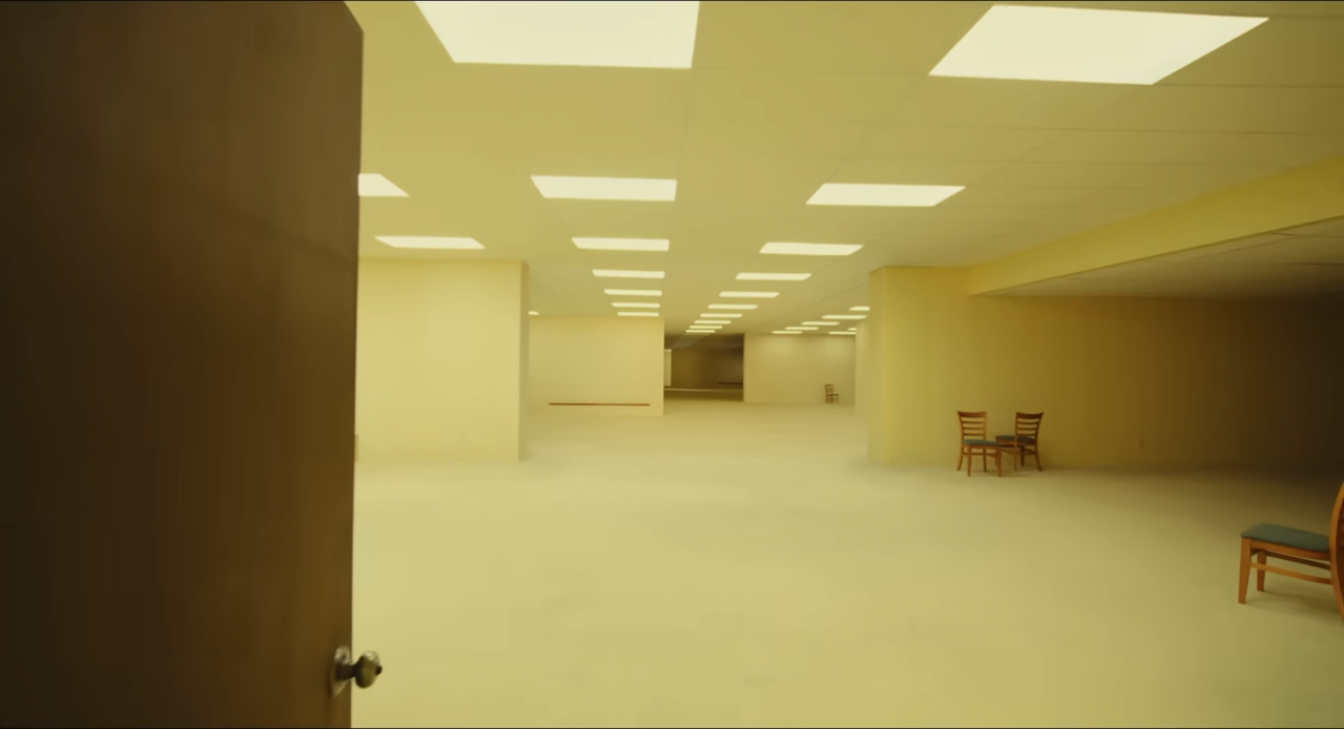
The movie “Backrooms” is coming out this May, and I’m ecstatic beyond words about it. See the trailer here. As far as movies go, I don’t follow much, but I expect this one to be a cult classic, if it is nearly as good as the YouTube series. The series and lore online is authentic, original, creative and has real depth to it.
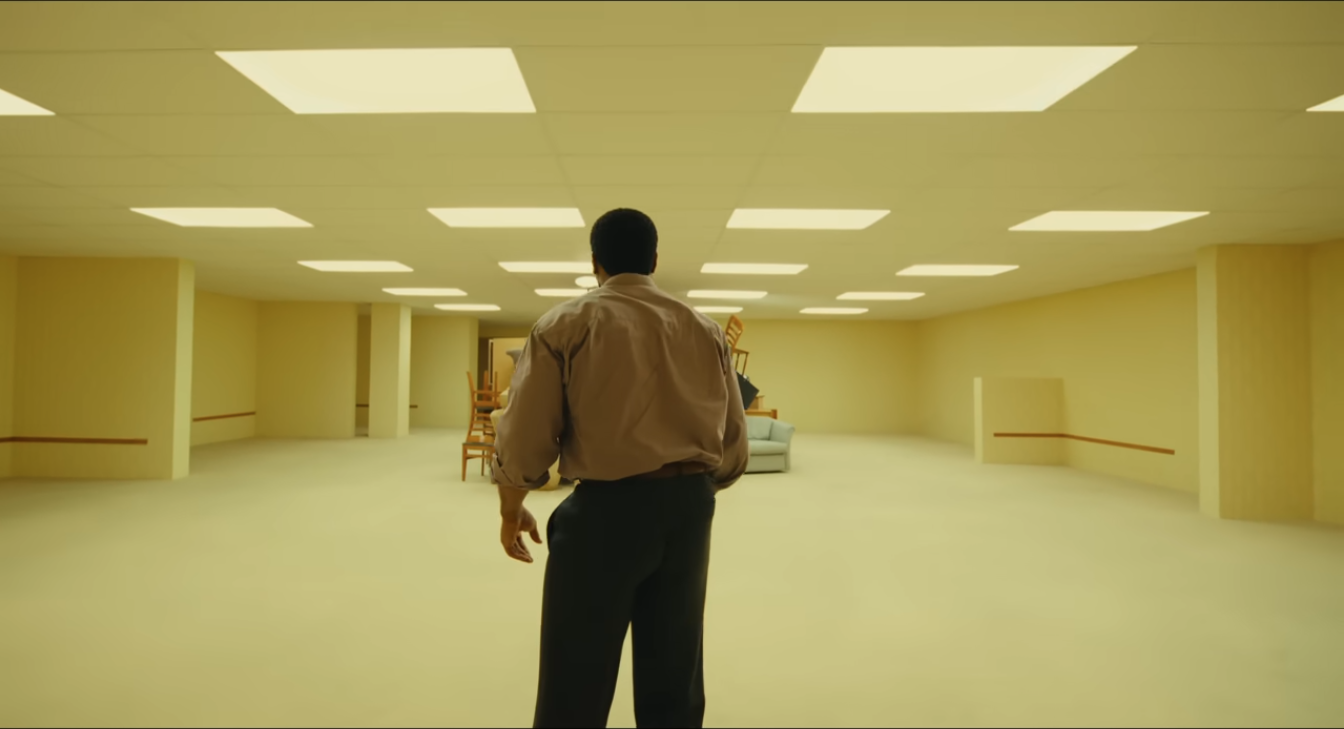
The Backrooms is a horror concept, not in the gory sense, but more the ‘unsettling’ and thought-provoking one, that originated on 4chan years ago and has slowly built presence on the internet. The concept flourished in a series of videos made by Kane Pixels on YouTube.
The general background of the lore goes like this: a secret government research project attempts to create an infinite storage space by manipulating physics. It is successful in creating a system of hallways with the aesthetic of massive 2000’s office spaces, accessible through a “threshold”, the portal into the alternate reality. These spaces are generally entirely empty minus lighting and walls, creating a liminal space and infinite maze. Some fragmented/distorted objects which are assumed to be remnants of the engineering process remain in weird orientations or repeated in odd ways, which it seems is the way the entire world inside there works: it duplicates its own design (somewhat poorly, as things get distorted) to create infinite space. Sometimes it’s ambiguous if the Backrooms were created, or discovered, with the answer seemingly lying in between. The layout shifts randomly, and the environment itself is just unstable. Doors back to the outer world disappear, time travel happens randomly, etc. Researchers enter the Backrooms to conduct experiments, fine-tune the system, and explore its quirks, but it’s risky.
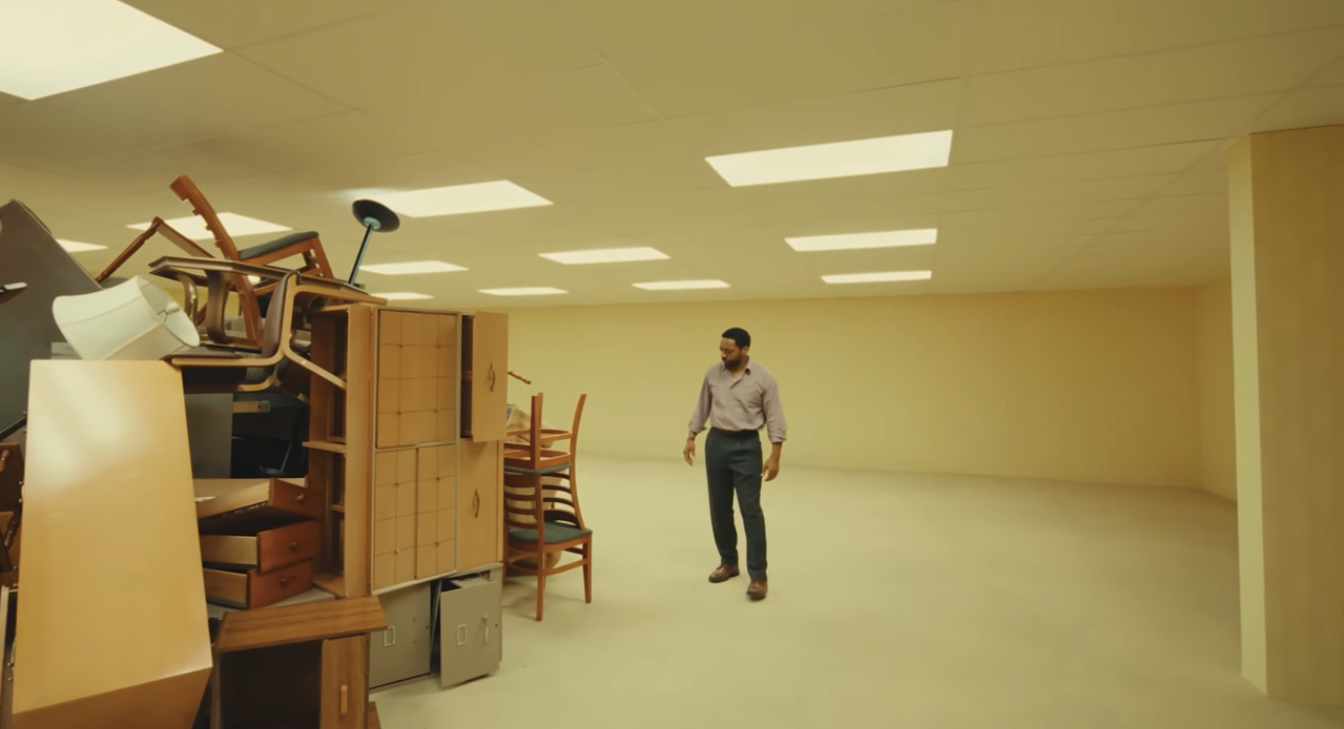
As the research continues, disasters happen. People go missing. The researchers find evidence of other people and things that somehow entered the space. Objects seemingly from our world end up inside the backrooms for no clear reason. Ordinary people find “thresholds” outside the government facility, then enter and get lost. One researcher goes missing, to be found months later after he attacks the other researchers while they explore the maze. There is, of course, some sort of “monster” or “entity” (or many, who knows) that lives inside the Backrooms and will chase down whoever enters and happens to cross paths with it. It seems that the researchers have created a portal to another dimension, or something, which is actively hostile to humans being in it, or just generally unstable in unpredictable ways. Our experiment tapped into some complex physics that lets us interact with the alternate reality space, and that space is reacting to our reality in odd, unexplainable ways.
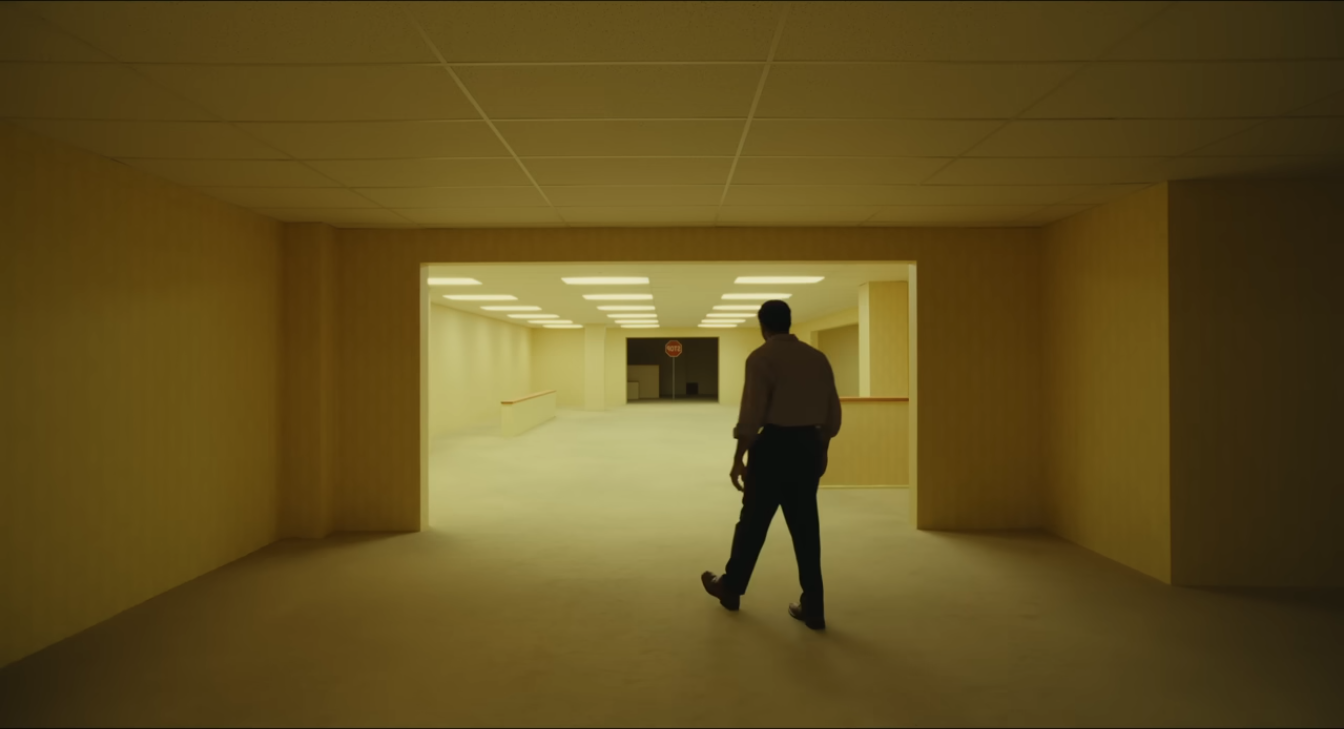
There are so many complex and deeply emotional themes involved with the Backrooms. The feeling of an unsettling, infinite maze with no escape as something hunts you down is of course the main component of the terror, but the broader concept touches on a number of finer emotions, like:
-
Repetition, distortion, and futility: modern lives are repetitive in nature with the 9-to-5 grind, and this distorts and obfuscates, if not entirely blinds us to our individual paths of finding meaning and happiness. People burn out from the repetitive grind alone. On top of this, the modern flood of media is not only producing distortion of truth (see 2), but it also usurps all emotions into its black hole - including rebellion against it. See Baudrillard - Simulacra and Simulation. The media sphere continually provides repetitive content that is distinctly hectic, not-interesting, pathetic and empty - yet rebellion against it is almost futile. Anyone who is disinterested in the distorted reality online is still faced with the very real effects of it in real life. The Backrooms is repetitive, all-encompassing, and has no exits. It wears down people because of its boring, soulless aesthetic and industrial, brutalist design, just like how social media is now dominated by for-profit interests, yet rebellion feels futile against the behemoth of corporations, just like fighting to exit an infinite Backrooms maze.
-
Tension between reality and contrived reality: modern media has produced not only “fake news”, but an entire crisis of what is truly “real” and what is not. We even have a term for it: “post truth”. The way we interact with reality is quickly becoming based on information we have heard about it - NOT direct experience with reality itself. Information about reality then builds our perceptions of it, instead of experience with reality, and if we fail to recognize this we can easily spiral into extremism. Similarly, the Backrooms, with its distorted and unsettling maze of walls, lights, and bizarre physical objects creates tension between the reality of the space itself, and the anti-reality or other-worldly essence. Are any of its objects real, are they projections based from “real” objects? Or are they entirely simulacra, devoid of an original, real model?
-
Confusion in the search for identity and feelings of being crazy for seeking it in an emotionally-devoid system: The modern world increasingly is unable to provide the necessary human-to-human care that initiates feelings of safety and security, leading people towards internal stress and confusion while searching for identity. With the full-scale normalization of crushing student debt, expensive necessities (like housing) and no economic safety net, people find it hard to relax and truly “find themselves” or develop towards self-actualization. Similarly, the Backrooms has no resources for humans to survive on: no water, no food, no space that feels safe and secure. It taps into the survival-mode, hopeless emotional space, the realization that the system we’ve built has no escape, and lacks some basic essence of humanity itself which is adaptable, understanding, forgiving, and not always cold or brutal.
-
Loneliness, purpose, and the unknown: The maze that the Backrooms presents appears to have no real purpose. Why is there nothing there, and who designed it to be like this? The remnants of an engineer are surely present, but the layout is bizarre and unsettlingly awkward. It seems to touch the primordial fear of entering a space that’s not yours, and wondering when the owner will find you - and if they’ll be amicable about your trespassing. It elicits the feeling not only of “what purpose does this place serve?” but also “why am I here, what am I even trying to find?”, which touches an existential part of the human psyche that’s prominent in modern society, as remote work, loneliness, and lack of community abounds.
-
Pining for an older world that’s analog: Technology has caused a lot of problems, and part of the allure of the Backrooms concept seems to be the interest in nostalgia from the 90s or 00s, or maybe more accurately: interest in the time before the great digital technology boom. People like physical objects and the idea of a world where humans had more control over their machines and were allowed to confidently make decisions in-situ without worrying about the perceptions of thousands of online commentators. There’s a real human desire for life as lived through two eyes without worry of the internet hive mind offering its opinion on everything. Escapism, essentially - the Backrooms presents a frontier, and perhaps the allure also comes from a desire for a physical place to discover that hasn’t been overrun by humans yet, something entirely new to build in, almost like an empty Minecraft world.